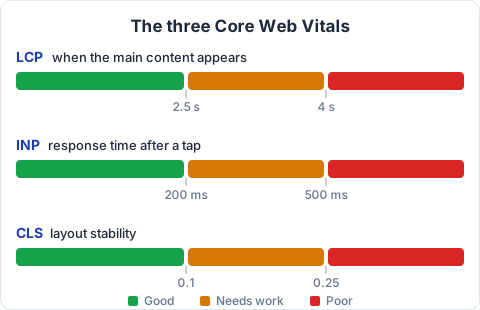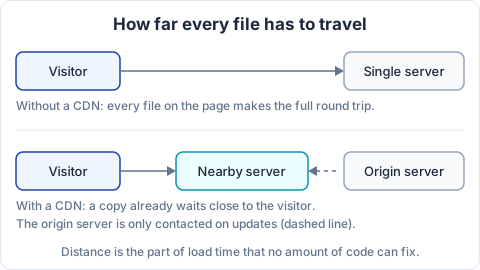







A potential customer finds you on Google from their phone, on an average connection. Their need is specific: an emergency repair, a quote. For three seconds, they stare at a blank screen. Then they go back and tap the next result — your competitor. You will never know they came.
This is the blind spot of most business websites: slowness raises no alarm, it simply shaves away the number of visitors who make it to the end of their visit. The good news is that website performance can be measured for free, in a few minutes, and depends far more on technical choices made at the start than on any budget. It is the foundation of how we approach building fast websites.
Speed is not a technical detail, it is revenue
Bounce: the customer who leaves without a word
The bounce rate is the share of visitors who leave without doing anything beyond looking at the page they landed on. A study published by Google in 2017 on mobile sites found that the probability of a bounce rises by around a third when load time goes from one second to three. Someone looking for a tradesperson on a Sunday evening has three tabs open: the first site to appear gets the call.
Every step of the journey pays for slowness
The home page is only the front door. The real cost is paid along the rest of the path: the service page that is slow to open, the gallery that loads in fits and starts, the button that does not respond straight away. At each of those points, some visitors give up. A fast site does not magically raise your conversion rate: it stops pushing it down.